- Product Overview
The Smart Direct Drinking Water System is an integrated water treatment solution that combines water purification, intelligent control, purified-water storage, pressurized supply, and operating-status monitoring. It is designed to provide safe, stable, and convenient drinking water for factories, schools, commercial buildings, industrial parks, hospitals, residential communities, and other public facilities.
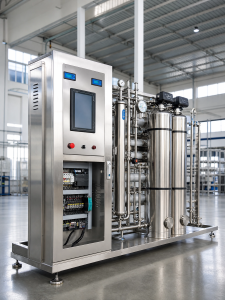
The system is manufactured primarily from stainless steel, offering good corrosion resistance, mechanical strength, hygienic performance, and ease of cleaning. Its robust construction allows it to operate continuously in a variety of installation environments. With a compact and well-organized layout, the system is suitable for both new projects and facility upgrades.
Multi-stage filtration and reverse osmosis (RO) membrane technology form the core of the purification process. Through the combination of different filtration units, the system progressively reduces suspended solids, particles, residual chlorine, odors, selected organic matter, microorganisms, and heavy metals. Depending on the raw water quality and application requirements, optional components such as ultraviolet sterilization, ozone disinfection, terminal precision filtration, constant-pressure water supply, and online water quality monitoring can also be added.
- Treatment Process
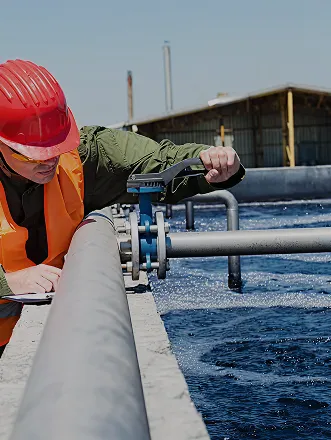
During operation, raw water first enters the pretreatment section. Precision filtration, activated carbon filtration, and other suitable pretreatment processes can reduce suspended solids, sediment, residual chlorine, odors, and some organic contaminants. This helps lower the operating load on the RO membrane and extend the service life of downstream components.
The pretreated water is then sent to the reverse osmosis system. Under pressure, the RO membrane separates dissolved salts, heavy metals, microorganisms, and other fine impurities from the feed water, producing purified water that meets the required application standard. Where higher hygiene protection or additional water quality control is required, the system can be equipped with ultraviolet sterilization, terminal filtration, or other advanced treatment units.
The purified water is collected in a stainless-steel storage tank. The intelligent control system automatically manages water production, storage, and supply according to water demand. When a point of use is opened, a booster pump and constant-pressure control system deliver purified water steadily to the designated outlets. When the tank reaches the preset level, the system can automatically stop water production, reducing unnecessary energy consumption and equipment wear.
The typical process flow is:
Raw Water → Pretreatment Filtration → Activated Carbon Filtration → Precision Filtration → High-Pressure Pump → Reverse Osmosis (RO) → Optional UV Sterilization or Terminal Filtration → Pure Water Tank → Constant-Pressure Water Supply → Drinking Water Points
- Intelligent Control and Monitoring
The system uses a PLC or intelligent controller to manage key operating functions, including automatic start-up, shutdown, water replenishment, flushing, and fault alarms. Operators can view the equipment status, operating parameters, and alarm information through the electrical control cabinet or human-machine interface, reducing manual intervention and improving operational convenience.
Online monitoring can be configured to track conductivity, pressure, flow rate, tank level, and other important parameters in real time. If the system detects low water pressure, insufficient raw water, abnormal pressure, filter blockage, or another operating condition, it can issue an alarm to help maintenance personnel identify and resolve the problem promptly.
For large factories, schools, commercial buildings, and industrial parks, the system can also be connected to a building management system, remote monitoring platform, or data management platform. This enables operating data recording, remote status checks, maintenance reminders, and more efficient equipment management.
- Construction and Configuration
The main frame, piping, and water tanks can be manufactured from stainless steel, providing a clean appearance, good corrosion resistance, and convenient daily maintenance. The internal piping layout is organized and accessible. Key components can be designed in a modular configuration, making filter replacement, inspection, servicing, and future upgrades more convenient.
Depending on project requirements, the system may include a raw water pump, pretreatment filters, a cartridge filter, a high-pressure pump, RO membrane elements, a pure water tank, a booster pump, a PLC control cabinet, online monitoring instruments, and terminal water outlets. For locations with higher hygiene requirements, food-grade piping, sanitary valves, and suitable disinfection equipment can be selected according to the application.
- Applicable Industries and Locations
The Smart Direct Drinking Water System is suitable for a wide range of locations that require centralized drinking water purification and distribution. In factories and industrial parks, it can supply purified drinking water to employee drinking areas, production support areas, offices, and shared facilities. In schools and educational institutions, it can provide convenient drinking water for students, teachers, and staff. In office buildings, hotels, shopping centers, and other commercial facilities, it can supply multiple floors or separate areas through a centralized system.
The system can also be used in hospitals, sports venues, airports, railway stations, residential communities, and other public facilities where water quality and supply continuity are important. Equipment capacity and configuration can be customized according to local raw water quality, the number of users, daily water consumption, the number of drinking points, and available installation space.
- Main Advantages
| Advantage |
Description |
| Stainless-steel construction |
Durable, corrosion-resistant, hygienic, and easy to clean. |
| Multi-stage purification |
Combines pretreatment, RO membrane treatment, and optional terminal processes. |
| Intelligent operation |
Supports automatic water production, replenishment, shutdown, flushing, and alarms. |
| Stable water supply |
Uses pressure, flow, tank-level, and water-quality monitoring to support reliable operation. |
| Energy-conscious design |
Automatically adjusts operating status according to actual water demand. |
| Easy maintenance |
Modular components and an organized layout simplify inspection and replacement. |
| Flexible customization |
Can be designed according to water quality, capacity, outlet quantity, and site conditions. |
- Customized Service
Because raw water quality, water demand, installation space, and supply requirements vary from project to project, the Smart Direct Drinking Water System can be designed and configured for each application. Based on the customer’s raw water analysis, estimated number of users, daily water consumption, supply range, and site conditions, we can help determine the appropriate treatment process, equipment capacity, storage volume, and distribution method.
We can provide support throughout the project, including process design, equipment manufacturing, piping and electrical assembly, factory testing, on-site installation, commissioning, operation guidance, and after-sales maintenance. For export projects and remote-management applications, technical documents, operating instructions, equipment configuration plans, and other project support materials can also be prepared according to customer requirements.
- Conclusion
By combining stainless-steel construction, multi-stage filtration, reverse osmosis membrane technology, and PLC-based intelligent control, the Smart Direct Drinking Water System provides a centralized, automated, and reliable drinking water purification solution for factories, schools, commercial buildings, and other facilities.
In addition to meeting daily drinking water needs, the system improves water supply management through automatic operation, online monitoring, and flexible customization. Customers can select a suitable configuration according to raw water quality, required capacity, installation space, and the number of water outlets, creating a more reliable, efficient, and application-specific water treatment solution.








 September 03, 2026