Performance Features and Maintenance Guide for Reverse Osmosis Pure Water Treatment Equipment

June 04, 2026
How to Treat Water?
The reverse osmosis equipment manufacturer will introduce the environmental performance characteristics and maintenance tips of reverse osmosis pure water treatment equipment.
Most pure water equipment uses reverse osmosis technology to purify water. Compared with other technologies, what are the characteristics of this technology, and why is it widely used and highly recognized? Below, we will introduce the features of reverse osmosis pure water equipment and the maintenance tips for reverse osmosis equipment.
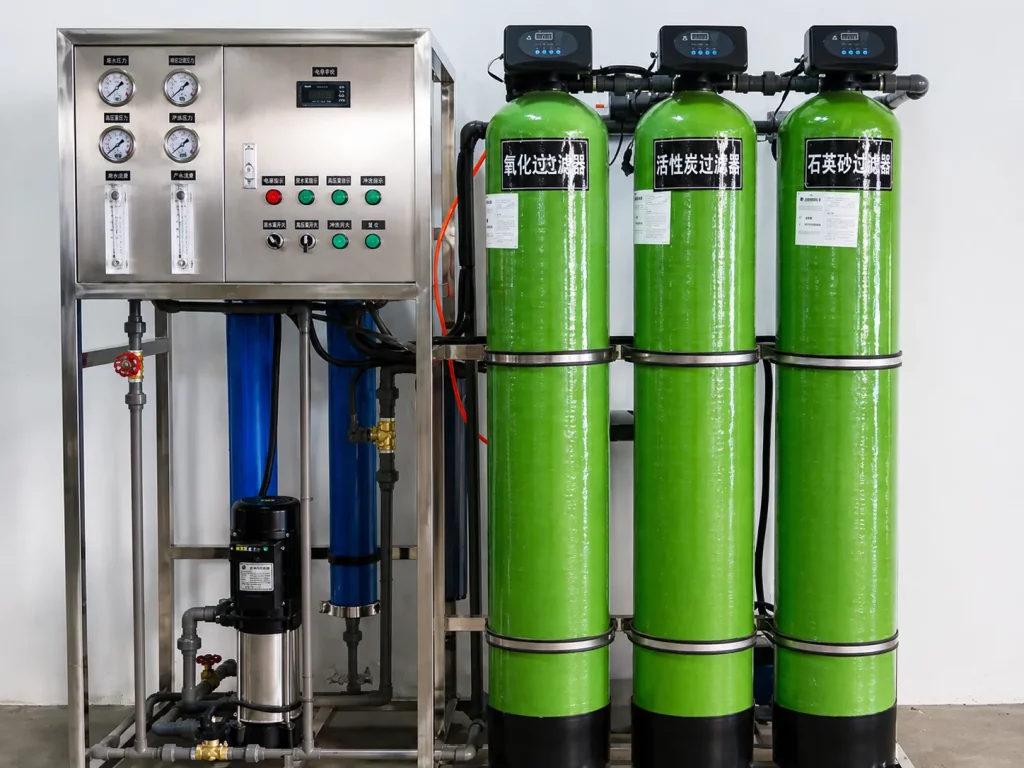
Maintenance Tips for Reverse Osmosis Pure Water Equipment
- Strictly control the inlet water quality to ensure that the equipment operates under water quality conditions that meet the required inlet water standards. If the inlet water quality does not meet the requirements, it may easily cause scaling on the reverse osmosis membrane, leading to rapid failure of consumables and seriously affecting the quality of the produced water.
- The total inlet water of the reverse osmosis system is controlled by the RO inlet control valve. If there is no change in the reverse osmosis inlet water, do not adjust the RO inlet control valve. It is strictly prohibited to fully open or fully close it. The RO concentrate control valve is used to adjust the system recovery rate. If the recovery rate does not change, do not adjust the concentrate control valve. It is forbidden to fully open or fully close it.
- Do not shut down the equipment for a long period of time, and ensure that it runs for no less than 2 hours every day. If the equipment needs to be shut down for more than 72 hours, the chemical cleaning device should be filled with 1% sodium bisulfite and 18% glycerin for protection.
- Each time the reverse osmosis unit is started, it should be flushed for 10 minutes under the condition of low inlet water pressure at 0.4 MPa.
- The operating pressure should be controlled as low as possible while meeting the requirements for water production volume and water quality. This helps reduce the decline of membrane water flux and lowers the membrane replacement rate.
- Operators should record operating parameters once every hour to check the use of the pure water equipment and the quality of wastewater. The main records should include:
Inlet water: pH value, conductivity, pressure, SDI, and water temperature.
Product water: conductivity, flow rate, and pH value.
Concentrated water: flow rate, pressure, and inlet pressure of each stage.
- When the reverse osmosis unit has a high-pressure or low-pressure alarm, first check whether the manual valve opening between the security filter and the high-pressure pump is too small. Then check whether the RO inlet regulating valve and the RO concentrated water discharge valve are normal. After that, press the high-pressure or low-pressure alarm reset button and restart the pure water production equipment.
- The inlet water temperature should be controlled according to the actual water consumption. The lower-temperature water that cannot meet the product water volume and water quality requirements under the critical pressure should be used as the inlet water temperature reference for that period. This can help reduce the decline in membrane water production.